mercoledì 26 dicembre 2012

Usare GMail come hard disk on line


gmail drive


Chi oggi non ha un account GMail? Sono davvero pochi coloro che non sono in possesso di un indirizzo di posta del tipo @gmail.com, ma molti sono pero quelli che ancora non utilizzano GMail a pieno, sfruttando tutte le possibilita a disposizione con questo servizio di casa Google.
Una di queste possibilita e offerta da GMail Shell Drive Extension, un’utility che una volta scaricata ed installata ci permettera di sfruttare gli oltre 6GB di spazio offerti da GMail come uno storage dati on line, vale a dire una vera e propria estensione del nostro hard disk.
Il funzionamento del tool e semplicissimo:

scarichiamo GMail Shell Drive Extension da Softpedia ed installiamolo estraendo l’archivio zip ed eseguendo setup.exein risorse del computer troveremo un collegamento a GMail Drive in cui copiare i nostri filedal menu “invia a” troveremo un collegamento a GMail Drive per inviare i file all’hard disk on line direttamente dal menu contestuale di Windows

GMail Shell Drive Extension carichera ciascun file copiato all’interno del GMail Drive, come allegato ad un’email che troveremo in posta in arrivo accedendo dalla webmail di GMail. Se non vogliamo trovare in posta in arrivo le email contenenti l’allegato, ci bastera creare un filtro dalle impostazioni di GMail.
L’applicazione non e sviluppata da Google, percio e possibile che ad eventuali aggiornamenti della piattaforma di GMail possano seguire mal funzionamenti anche di questo tool, in attesa che venga aggiornato dallo sviluppatore.
E tu come utilizzerai Gmail Shell Drive Extension?

Christmas Eve Dealmaster: Quiet your relatives with headphones!

AppId is over the quota

Merry Christmas Eve, Arsians! Too much family got you down? Aunts and uncles and cousins and in-laws invading your personal space, going through your fridge, screaming at each other at the top of their lungs? It's all part of the holiday experience!

But it doesn't have to get you down. We've got a great deal on some Audio Technica noise-canceling headphones, which, when combined with a pocket flask of vodka, will go a long way toward bringing peace and joy back to these relative-filled days. Just slip 'em onto your noggin and you're good to go! Optionally, get drunk while wearing them for maximum holiday cheer, though don't go too far with the sauce or else you'll suddenly be the crazy relative, all slurring and stumbling around with headphones on.

If that's not your style, we got other stuff, too, including a 256GB Crucial M4 SSD for about $0.75 per gigabyte, and $300 off a 50" Toshiba LCD HDTV. Happy Dealmaster Christmas!

Top Deal:

Laptops and tablets:

15.6" HP ENVY dv6t-7200 Quad Edition Core i7 Laptop w/8GB RAM, 750GB Hard Drive for $679.99 with free shipping (normally $879.99 - use coupon code: NB8372)15.6" Lenovo IdeaPad Y580 Core i7 Quad-core Laptop w/8GB RAM, 1080p LCD, Blu-ray, 1TB HDD & 2GB GeForce GTX 660M Graphics for $899 with free shipping (normally $1,299 - use coupon code: USPY51321220)17.3" Toshiba Qosmio X870 Core i7 Laptop w/3GB GeForce 670M, 16GB RAM, 128GB SSD, Blu-ray for $1,999.99 with free shipping (normally $2,299.99)

Storage, hardware, and monitors:

Accessories, gadgets, and portables:

TV and entertainment:

Expand full story

Facebook to Start Charging for Messages

AppId is over the quota

Facebook is making yet another change to its site, this time with regards to message sending.  This move will allow you to send messages to people outside of your network and not be listed as spam while letting Facebook monetize a portion of its services.

Facebook to Start Charging for Messages

Most of your messages go to your inbox, but a few end up in the “Other” folder and are often not even opened or noticed.  These are the messages that Facebook has decided are less important because they are from someone not in your network.  They could be spam and are determined by Facebook’s algorithms.

Paying to Avoid the Other Box

If you want to avoid being dumped into the “Other” folder, you can pay $1 and your message will end up in the recipient’s inbox.  This will be helpful it you want to make contact with someone you know who is not in your network or to make contact with someone about a job.

The charge will cut down on spam since those people send out mass messages and will not want to pay for each one.  It will help to ensure that if you are sending an important message that it gets read.

To start with, the new feature will only be available to certain people in the US.  Companies will not have access to this feature at this point and the paid emails will be limited to just one a week at the start.

New Filters for Inbox

Facebook is also trying out some new features for your inbox.  With Basic Filtering, you will get all messages from your friends and from people in your extended network.  You will also have the option of Strict Filtering that will be mostly messages from your friends.

Facebook will also allow you to get messages from the Messenger for Android app.

The new pay for messages feature will be tried out for a few months, but if it is popular it may become permanent for all users.

[Image via aitnews]

Holiday Appalooza: Merry Christmas to you and your Android device

AppId is over the quota

It's almost Christmas, isn't it? Although the Google Play store may be wrought with Talking Santa apps and overpriced live wallpapers, we sifted through those titles to get to the ones with the most holiday spirit. Check them out below.

Amazon Santa, Free

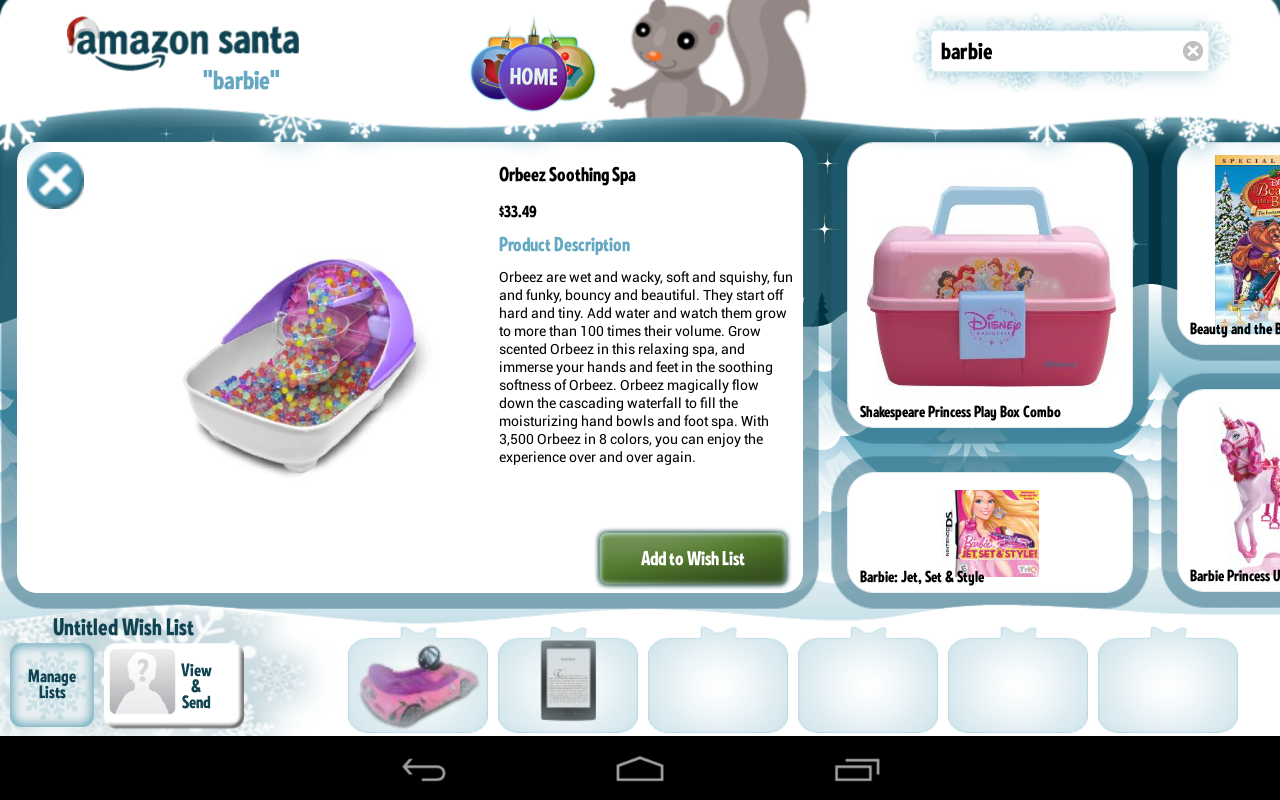
Surely all of your holiday shopping is done by now (if not, you've got three more days), but it’s never too late to send Santa a letter. Amazon Santa lets users and their little ones put together a Christmas list to send to the Big Guy Up North. It also features a custom, kid-friendly catalog. Even if you don’t end up putting together a wish list, kids can peruse through the toy section like it's the Service Merchandise catalog.

Santa Trackers, Free

Last year, Google and the North American Aerospace Defense Command (NORAD) joined together to bring your kids a Santa-tracking app. Sadly, the two have split up this holiday season but both NORAD and Google now have their own separate Santa Tracker applications.

Google’s Santa Tracker doesn't do much yet, since Santa hasn't technically left to deliver presents. However, once he takes off, you can watch him as he makes his way around the world. There’s a browser version, too. And as an added bonus, you can ask Santa to send a call via Google Voice to your favorite person.

NORAD Tracks Santa also counts down to Santa’s departure, or you can play a game of Thin Ice while you wait for Santa to hop into his sleigh.

Last minute gifts

Oops. You forgot to send someone a card. These things happen, so consider sending them an Ink Card. You can choose from more than 60 different Christmas cards, stamp on a digital photo, and then send it out anywhere in the US, UK, Europe, or Canada, where it will arrive within the week. If you’re worried it won’t make it there for Christmas, go with a more generalized Happy New Year card instead. Each card is printed on card stock at 300 DPI and costs $1.99, which also includes postage.

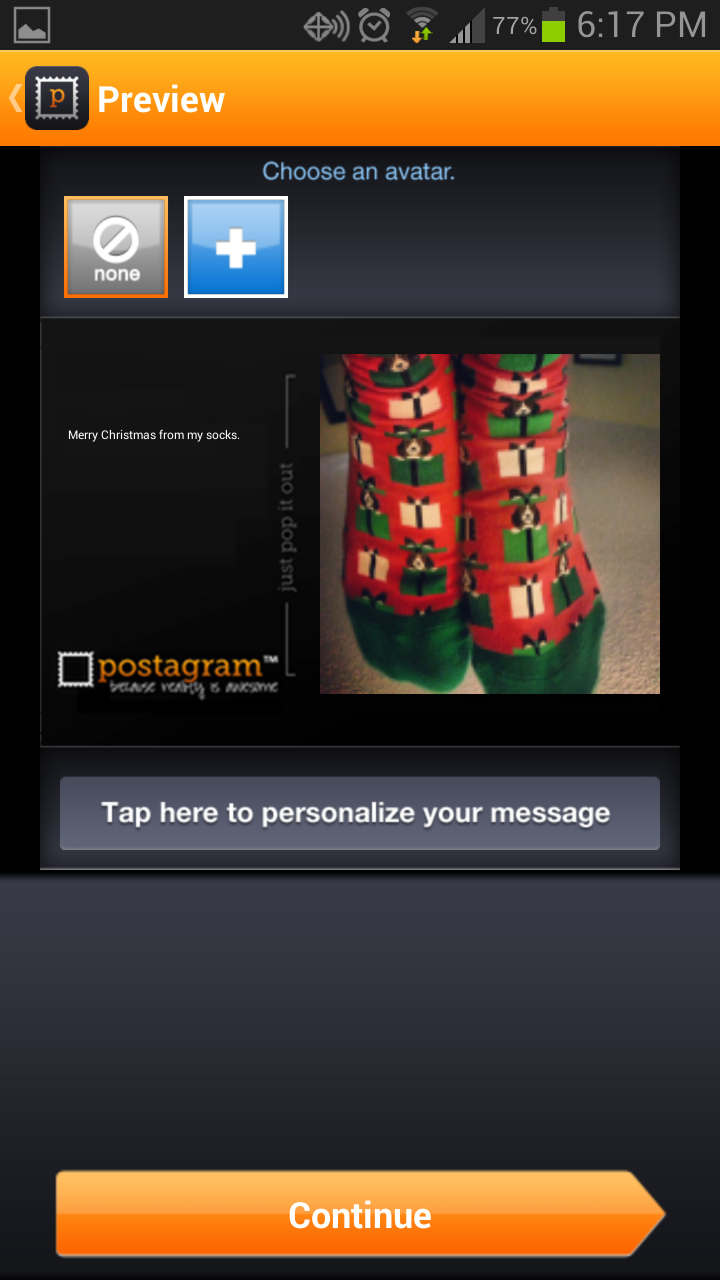
If your friends are hipsters, you might want to try sending a Postagram Postcard instead.

Listing image by Image courtesy of Karmela Arocena

Italy finally acquits Google execs convicted over user-uploaded video

AppId is over the quota

Sign up for the Ars Technica Dispatch, which delivers links to the most popular articles, journals, and multimedia features via e-mail to your inbox every week.

I understand and agree that registration on or use of this site constitutes agreement to its User Agreement and Privacy Policy.

From Karateka to Cubasis, 8 new iOS apps worth a try

AppId is over the quota

The App Store has over 700,000 options available, with dozens of new apps released every week. As we noted last Friday, we can't always take a deep dive into every app that comes across our desks. But sometimes we hear about apps that sound quite promising and feel like they deserve to be highlighted.

Here are several new or updated apps that you might give a try this weekend. (All links are for the US App Store.)

Famed game designer Jordan Mechner has teamed up with The Batman artist Jeff Matsuda to create a throughly modern, 3D remake of his classic Apple II game Karateka. The new version is available on Xbox Live, PSN, and Steam, and an iOS version was released this week. You have a chance to play three different heroes, all vying for the heart of a kidnapped princess in feudal Japan. The game might be fun for those of us who played the original on an Apple II, Commodore 64, or even an NES, but younger gamers will still appreciate the unique style and easy-to-learn gameplay.

Steinberg, makers of the Cubase sequencer, have released an adapted version called Cubasis for iPad. At $49.99, the app is no casual purchase, but for serious musicians the app is worth considering as part of a mobile music-making toolbox.

Cubasis can record dozens of audio or MIDI tracks (it's compatible with Core MIDI). It can also add studio-quailty effects and mix everything down for export to SoundCloud, Dropbox, and more. Projects can also be shared with the desktop Cubase app for further editing. For live performances and recording sessions alike, the app also comes complete with 70 virtual instruments based on the HALion Sonic workstation and 300 MIDI and audio loops to get you started.

This little mobile photography gem is a one-trick pony, but the trick is an extremely clever one. Select two photos; the app analyzes them and then applies the color scheme from one photo to the other. (See a video of how it works here.) You can make some crazy color changes, but this primarily helps you match the look of photos shot under different lighting conditions. Once you save the edited versions, you can later combine them into albums, galleries, or collages with an overall harmonious color palette.

If you like retro styles but are looking for a break from Instagram and its many clones, you might like Retromatic. It includes a simple and effective masking tool which allows you to pull your subject out of a photo and put it into a unique, retro-inspired graphic. You can add other elements like sunbursts, borders, and more, resulting in something far more original than the usual "lo-fi" filtered photo.

Redbox Instant is a new streaming video service from Redbox and Verizon, meant to compete with the likes of Netflix and Amazon Instant Video. If you are not already a Redbox user, you can add $8-per-month movie streaming to your iOS devices with this new app. The service itself is currently in beta, but you can sign up to join the beta now.

Longtime Ars forum member vafarmboy recently published his first iOS app. It's rather simple and straightforward, but Strengthiness Interval Timer is designed to help you set up and follow an interval training regimen, such as Tabata protocol, Super-8, or VO2max/Viking Warrior Conditioning. (I personally like to use custom intervals when building speed for 5K runs.) Just set a time, how many rounds you want to repeat, and go.

The current $0.99 price is good through December, after which it will go to its regular $1.99 price.

Tumblr has revamped its iOS app with a native iPad user interface. The now-universal app is optimized for Retina displays and also includes Markdown support for posting and a new Explore tab for finding new tumblogs to follow.

Dropbox can be an indispensable tool for syncing and accessing files from your iPhone or iPad; in fact, many apps rely on Dropbox for remote file access over Apple's own iCloud. The new 2.0 version of the iOS app adds a ton of UI polish but also includes easier file uploading to specific folders as well as a completely new photo viewer which lets you interact with your synced photos.

Come rimuovere MSN Messenger da Windows XP

ad middle

rimuovere msn
Una versione molto vecchia di MSN Messenger e installata come applicazione predefinita su Windows XP e, non si capisce bene per quale motivo, non e disponibile alcuna funzione che ne consenta la disinstallazione da “Pannello di Controllo > Aggiungi/Rimuovi Programmi“. Addirittura, se avete installato Windows Live, vi troverete ad avere in esecuzione sia il vecchio MSN Messenger che il nuovo Windows Live Messenger, con tutti i fastidi che ne derivano!

In ogni caso, fortunatamente e possibile rimuovere MSN Messenger da Windows XP in maniera piuttosto semplice ed immediata, utilizzando la linea di comando. Ecco come procedere:

Dal menu Start selezionate “Esegui“Nel box che si aprira digitate “cmd“, quindi date “OK” per aprire il prompt dei comandiNel prompt del DOS digitate il seguente comando:
RunDll32 advpack.dll,LaunchINFSection %windir%\inf\msmsgs.inf,BLC.RemoveDate invio e in pochi istanti MSN Messenger verra rimosso dal sistemaRiavviate il PC per rendere effettive le modifichead middle

Creare DVD con WinX DVD Author [Licenza Gratuita]

ad middle

WinX DVD Author
WinX DVD Author
e un ottimo programma per creare filmati su DVD a partire dalle fonti piu svariate come ad esempio file AVI, MOV, MPEG, WMV, FLV,ecc. In aggiunta consente anche di aggiungere ai propri video con facilita sia i sottotitoli, che menu e copertine personalizzate, al punto da configurarsi come prodotto ideale per gli utenti meno esperti (come il sottoscritto) che vogliano creare e montare su DVD in poco tempo qualsiasi video amatoriale come ad esempio il video del matrimonio o quello delle vacanze icon wink

Di seguito le caratteristiche tecniche dettagliate di WinX DVD Author:

Conversione in DVD dei seguenti formati video:AVI, ASF, MPEG, MKV, MOV, RM, RMVB, XIVD, DVIX, H264, OGG, QT (quick time), FLV.Wizard automatico per la creazione dei menu DVDSemplici funzionalita di montaggioSupporto sia PAL che NTSCSupporto dei sottotitoli (srt*)Supporto sia del formato DVD-9 che DVD-5Possibilita di effettuare conversioni batchSupporto audio Dolby Digital AC-3Supporto dei formati wide screen (16:9) e standard TV (4:3).Supporto di tutte le interfacce hardware correnti (IDE / SCSI / USB / 1394 / SATA)Creazione di video di elevata qualitaSupporto multilingue (Italiano compreso!)

Se al tutto aggiungiamo il fatto che, nonostante WinX DVD Author costi circa 40$, e possibile ottenerne una licenza gratuita sfruttando una promozione di Softpedia, direi che non c’e prprio nessun motivo per non scaricare subito questo interessante software.

Ecco come procedere per ottenere gratis WinX DVD Author:

Collegatevi a Softpedia utilizzando questo link: http://bit.ly/21IyydCliccate sul link “Softpedia Mirror (US) – v 5.5.8 FULL VERSION [EXE]” per scaricare le versione completa del programmaEffettuate l’installazione (non e richiesta alcuna registrazione o licenza!)ad middle

Facebook and Microsoft Working on a Deal

AppId is over the quota

Facebook has worked with almost every major player in the internet industry.  Now, it seems to be working on a deal with Microsoft that could benefit it and advertising in general.

If successful, Facebook could create an advertising network to rival Google’s.  The subject of this negotiation is Atlas Solutions, a product Microsoft bought back in 2007 as part of a deal with aQuantive.

Facebook and Microsoft Working on a Deal

Nothing has been said about how close the deal is to closing, but that talks are serious.  Gaining an ad network is one thing Facebook needs to move it into a new arena where it will launch an ad network for other websites.

How it Benefits Facebook

Facebook has access to more users’ email addresses, along with other private information.  It can also relay information to marketers about what users are looking at and if they saw an ad online before they bought it in a store.  Retailers also have access to customers’ phone numbers and addresses since they buy them from data collection agencies.

Facebook can already tell how much impact an ad on their website had on users and how it increased sales.  With Atlas Solutions, it can do the same thing for other websites.  This makes it a very attractive company for other businesses.

The biggest job will be keeping users from panicking about losing their privacy.  However, since no personal data will actually be leaving Facebook’s hands, it shouldn’t worry people too much.  They will provide the data about sales but not give out specific information that violates privacy laws.

The second obstacle they have is to build the technology to create this ad network, but that is why they are looking at Atlas Solutions.  With this piece of the puzzle, they are well on their way to establishing themselves as the new ad network in town.

[Images via thetechblock & insidefacebook]

How can I get out of my own head as the only developer on a project?

AppId is over the quota
This Q&A is part of a weekly series of posts highlighting common questions encountered by technophiles and answered by users at Stack Exchange, a free, community-powered network of 80+ Q&A sites.

BenCole Asks:

I've spent the last year as a one-man team developing a rich-client application (35,000+ LoC, for what it's worth). It's currently stable and in production. However, I know that my skills were rusty at the beginning of the project, so without a doubt there are major issues in the code. At this point, most of the issues are in architecture, structure, and interactions—the easy problems, even architecture/design problems, have already been weeded out.

Unfortunately, I've spent so much time with this project that I'm having a hard time thinking outside of it—approaching it from a new perspective to see the flaws deeply buried or inherent in the design.

How do I step outside my head and outside my code so I can get a fresh look and make it better?

Related: "What's the most effectie way to perform code reviews?"

akton Answers (29 votes):

A few ways to approach this:

Find someone familiar with the technology and business problem and talk it through. This may be hard in a single-person team but is generally the best option.Work on a different project for a while. This also may be difficult but even taking a week's break can give you a fresh perspective.Look at similar projects or products, such as open source products if any exist. Be careful not to copy code but they may have approached the idea completely differently.Learn a new language, library, or framework. The techniques involved may give you insight how to approach the same problems you have differently.Read a good book/blog/magazine on design or the language/framework. I am not sure what level of skill you are at, but there are lots of alternatives in other answers on this site.

If you have specific examples you want addressed, perhaps post them here.

Freiheit Answers (2 votes):

Rubber duck debugging: Sit down with a piece of code or a module or a feature and explain it, out loud. When you find yourself saying something that sounds wrong, foolish, or just plain not right, write it down as an issue to investigate.

Related: "Fix bugs or wait for the customer to find them?"

Karl Bielefeldt Answers (6 votes):

A short memory helps. I've been known to complain about the "idiot" that changed something a week ago, only to find from source control it was me.

A good first step is to identify code that could be improved. Look in your source control for the files that change most often. Which code is the hardest to work with? Which code produces the most bugs? What kinds of changes cause a ripple effect throughout the code? At this stage, you don't have to know why the code is troublesome, just that it's troublesome.

Once you've identified areas to work on, then try to figure out what the problem actually is. There are books that take a systematic approach to categorizing design problems. Look at Martin Fowler's Refactoring, Herb Sutter's C++ Coding Standards, Robert Martin's Clean Code, etc. They have a bunch of "rules" that let you look at your code in an objective way.

Once you've identified what the problem likely is, then try out different ways to fix it. For example, if the rule you broke is "prefer composition over inheritance," then change it to composition and see how it feels.

Obviously, it can be helpful to have someone else look at the code, but it's not always as helpful as you might think, because you are much more familiar with the kinds of problems the code causes than anyone else, and the reasons behind the design. Learning some ways to objectively evaluate your own design will pay big dividends.

Brian Hoover Answers (1 vote):

Everyone could code better. We do things fast and then realize a couple of weeks after that it could have been done more efficiently. The point is that 90 percent of your code is probably good enough.

Look over your bug logs and find the routines that might be causing issues. As you find the bugs, you can also review the code and think about what might make the code more efficient. Most of the time, you'll realize that beyond fixing the bug itself, you won't be able to make a noticeable improvement, but sometimes, you'll realize that there's a better way to do something.

Talk to users and see where they are noticing issues, either UX or speed issues. Fix these issues, with an eye for trying to improve your code.

At some point, you will discover that your code has become too brittle and that there is simply no way to make the changes that you need to do. Then think about how you could have made the system more flexible, either via APIs or test driven development. In many cases, you'll discover that you can just start putting these APIs into the code, with out a huge amount of changes. In other cases, you'll realize that the effort of improving the code isn't worth it.

Incremental changes can be hard. The goal is to not entirely re-write the code base if you don't have to. Sure, you're a better programmer now than you were a year ago, but what you have must be working right now. 5 years from now, when a junior programmer complains to you about the legacy code they have to try to fix, just smile and nod, and don't admit that you wrote it.

Find the original post here. See more questions like this at Programmers, a Q&A site for conceptual programming questions at Stack Exchange. And of course, feel free to ask your own.

Microsoft Earning PC Revenues from Surface Tablet

AppId is over the quota

Microsoft has been the kingpin of the PC market for two decades. From the early 90s, Gates and Co have dominated the market, flooding both home and enterprise usage. However, the turn of the millennium saw the rise of new gadgets which threatened to take away the demand for PCs. The laptop was the first catalyst towards this and smartphones, modern cellphones and tablets keep adding to the lot. Hence, it is natural for Microsoft to have doubts about its success when the world finally enters a post-PC phase.

Even now, most people have reverted to mobile and portable devices instead of using a PC. Even the laptop is now being displaced with handheld devices as the users get the same features, software and programs on that. Internet connectivity has come a long way over the years and people don’t have to compromise on browsing or downloading speed to use internet on the new gadgets. Microsoft finally jumped on the bandwagon and released its own tablet: Surface.

Microsoft Earning PC Revenues from Surface Tablet

However, the company hasn’t been successful by fluke. In fact, they have found a way to capitalize on growing user demand for tablets in today’s market. From the outset, it would seem as though Microsoft wouldn’t have much of a chance of gaining a substantial market share in the face of immense competition from Apple and Samsung. What they have done is priced Surface in a way that enables the company to earn PC revenues.

It may sound confusing to the average Joe but Microsoft has proven that it is shrewd once again. Though there has been no official word on the matter, an analysis carried out by a market expert showed that the tech giant has been up to its tricks again. According to the report, Microsoft has priced the Surface so that the license fees it is charging are at the same level as they did for their PCs. This is the reason why Surface is priced at $499.

The main problem faced by Microsoft when developing the tablet was the cost of the Office suite. The Microsoft Office is a major feature of Windows and people around the world use it regularly. However, it costs close to $70 and including it on the Surface tablet drives the costs up. In addition, the Windows OS costs around $50 which added to the cost of making the tablet ($200) means Microsoft spends over $300 on making one Surface tablet.

What this means is that they are earning a profit of over $150 per unit sold taking into account the costs of marketing and distribution. This is similar to how Apple prices its products. More importantly, it is close to the $120 Microsoft earns for each PC it sells. Still, it remains to be seen whether Surface is as successful as the iPad or fizzes out in the near future. Some analysts have suggested that Microsoft should sell the tablet itself to cut down costs further and increase the profitability.

Regardless of whether Surface is successful or not, the move by Microsoft to try to pull in PC revenues from a tablet show that it is preparing for a post-PC world.

[Image via geek.com]

Apple lifts block on combo 30-pin+Lightning charging accessories

AppId is over the quota

The Kickstarter campaign that was "shut down" by Apple for creating a charging station that had both Lightning and 30-pin iPod connectors wasn't following the specifications required to be part of Apple's "Made for iPod" (MFi) program, according to Apple. Still, Apple has reviewed the specifications and has apparently reversed course on those restrictions, telling Ars on Friday that it has decided to allow 30-pin and Lightning connectors side-by-side for charging purposes.

"Our technical specifications provide clear guidelines for developing accessories and they are available to MFi licensees for free. We support accessories that integrate USB and Lightning connectors, but there were technical issues that prevented accessories from integrating 30-pin and Lightning connectors, so our guidelines did not allow this," Apple spokesperson Tom Neumayr told Ars on Friday. "We have been working to resolve this and have updated our guidelines to allow accessories to integrate both 30-pin and Lightning connectors to support charging."

The incident highlights some of the problems accessory creators can face when using Kickstarter to fund yet-to-be-created projects—especially as they relate to Apple accessories. Earlier on Friday when we spoke to James Siminoff, the creator of the POP Kickstarter campaign, he explained that the timing of the iPhone 5 announcement (and its related introduction of the new Lightning connector) is what threw the whole project for a loop.

"We were already a member of the MFi program before the release of the iPhone 5. When we came out with the project, one of the biggest questions we got was whether we'd support the iPhone 5, and we said 'absolutely,'" Siminoff told Ars. "At the time, there was no reason to think that they would change the way in which they're selling [the MFi program]."

That is, Siminoff and his company didn't expect Apple to make changes to the restrictions placed on the MFi spec—he says previously, Apple didn't have language that would have prohibited an Apple connector to be sold in a product alongside another connector. But eventually Apple did begin to issue new guidelines that said Lightning connectors couldn't be included alongside any other kind of connector—30-pin or otherwise. Siminoff says his company interpreted this as not applying to their product.

"They started to come out with guidelines, and there was one that said Lightning would not be allowed in any product that has 30-pin," he said. "We didn't clarify if that was for chargers or a docking station—we assumed the latter—so while we saw it, it didn't seem to make sense for what we were doing that they would not allow these two things to be on the same device."

Siminoff went on: "Maybe we should've seen that and decided that we can't make [the POP charger]. But it didn't make any rational sense. At the same time, they were changing things, updating the policies, so we said, 'OK we'll submit the project [to the MFi program] and see what happens.'"

What happened was that Apple eventually turned the application down for not following the updated MFi spec. As such, Siminoff made the decision this week to cancel the project altogether rather than modify it to allow users to plug in their own Lightning cables because it simply wouldn't have been the product that he originally wanted to produce.

"We got very strong feedback saying we should still make a product that just has USB," Siminoff told Ars before Apple decided to update its guidelines, "but I still feel good about the decision to just refund everyone's money, because we just wanted to make a product that we believed in."

A product they "believe in" would include clean lines and easy-to-use cables coming from a single charging station, not adapters and ports that users need to plug things into, said Siminoff. That's exactly why Siminoff remains skeptical of Apple's apparent reversal of its decision to bar the combination of 30-pin and Lightning connectors; what about Lightning alongside other connectors?

"If it has to be an Apple-only product, and Lightning can't be next to, say, an Android charger, then it's still not something we want to make, Siminoff said after hearing the news about Apple's updated guidelines. "I hope they become customer friendly. Maybe we will be able to do [the POP charger] after all."

Come cambiare il MAC Address

ad middle

d9aade745f39519ddcc30551e738b9b1

Come tutti probabilmente saprete, il MAC Address e un identificativo univoco di cui e provvista ogni scheda di rete, indispensabile per consentirne il funzionamento all’interno di una qualsiasi LAN (dall’ottenimento di un IP address alla corretta gestione del traffico).

Normalmente il sistema operativo non consente di modificare il MAC address della scheda di rete, soprattutto per il fatto che questa tipologia di modifica puo essere utilizzata a scopi malevoli per attacchi MAC spoofing che, se opportunamente studiati, possono consentire di ottenere l’accesso a reti WI-FI protette o addirittura di spiare il traffico di rete destinato ad altri computer.

Grazie a Mac Makeup potrete modificare il MAC address su qualsiasi computer con Windows XP/Vista/2003 con molta facilita: questo tool gratuito consente di memorizzare lo storico dei MAC Address precedentemente utilizzati, di generarne di nuovi in maniera casuale o di inserirli manualmente a vostro piacimento. In aggiunta e possibile anche agire a basso livello sulla configurazione dello stack TCP/IP intervenendo sui parametri relativi alla connessione, come il Default TTL, il numero massimo di connessioni contemporanee, la configurazione ARP e Multicast.

Scarica Mac Makeup

ad middle

Nokia annuncia il nuovo Nokia 5250

ad middle

Nokia ha presentato oggi finalmente il nuovo cellulare Nokia 5250, per il quale erano state pubblicate in passato alcune foto di anteprima.

L’ufficializzazione attraverso il blog di Nokia, ne conferma quindi l’inserimento e la disponibilita in listino.

nokia 5250 1

Nokia 5250 e un cellulare touchscreen entry level, dal costo decisamente contenuto e dalle buone performance tecniche.

Il suo display, come anticipato, e un touchscreen da 2,8 pollici in formato 16:9 per una risoluzione di 360×640 pixel.

Ottima l’autonomia dichiarata, con  430 ore previste in stand by, 24 ore in riproduzione musicale e 7 ore in conversazione

Il supporto microSD sopperisce alla scarsa memoria interna di 51 Mb, espendibili a 16 Gb.

La sua dotazione musicale e Social e piuttosto interessante, con supporto Ovi Music, radio FM e accesso rapido a Facebook e Myspace. La funzione Ovi Share consente invece di condividere rapidamente le foto scattate con la fotocamera posteriore da 2 Megapixel.

Per la connettivita troviamo Bluetooth con supporto A2DP, ideale per la musica senza fili, e supporto di rete Gsm e Edge.

Il prezzo indicativo del nuovo Nokia 5250 sara intorno ai 130 euro, tasse incluse.

ad middle

500 password da evitare assolutamente

ad middle

In occasione della creazione di una qualsiasi utenza, in molti sottovalutano l’importanza di scegliere una password sufficientemente robusta: nel timore di dimenticarla o perderla, fin troppo spesso si utilizzano date di nascita, nomi propri o banali sequenze numeriche,  con il risultato che poi magari ci si ritrova con l’account Facebook o Gmail violato!

Capisco che creare ogni volta una password differente “fatta di almeno 8 caratteri tra cui maiuscole, numeri e simboli” possa risultare un po’ difficoltoso, pero magari almeno dovremmo evitare di sceglierla tra una delle 500 password peggiori password in assoluto, individuate da Mark Burnett (autore di “Perfect Password Selection and Protection”) ed elencate nel poster di seguito:

c381d53ab68de1def0e4c9ac475203ff

ad middle

Scritto il 2 agosto, 2010 alle 11:19   e archiviato in: Sicurezza
Tags:

iPad cooking app showdown: holiday week edition

AppId is over the quota

The last time we took a look at cooking apps for the iPad back in August, it was a hit. That unexpectedly popular post generated tons of reader e-mail with more suggestions—and questions—about other cooking apps geared towards different needs. Indeed, there are plenty of cooking apps out there, and we only touched on what we thought were the best handful of them. But the rest can't be all bad, right?

That's why we decided to do another cooking app roundup, just in time for some of you to use them to make (or assist with) that huge, overwhelming holiday meal coming up next week. But don't worry, we're not focusing entirely on apps that excel in turkeys and cranberry sauce—not everyone is into "traditional" holiday food items. You can use these apps at any time, really; we're just happy to have another excuse to write about cooking and the iPad.

So, after asking my Twitter followers for a new rash of recommendations, the following five apps were the ones that appeared the most interesting and of the highest quality. I gave them all a quick hands-on to see how they work, so let's dive in:

I have a recently updated version of the (ginormous) Cook's Illustrated book, so I'm familiar with the excellent style of its creators. I did not, however, realize that the Cook's Illustrated app would basically be a magazine app for a magazine about cooking when I first downloaded it. Indeed, like other magazine apps, the app itself is free but the content costs money—it's $5.99 per issue for relatively recent issues, or $1.99 per one month subscription ($19.99 for the year). There is no way to get content on this app without paying money for something, so if that's not your thing, this app won't do anything for you. That said, I bought the November/December issue through the app's in-app purchasing system and waited for the entire 390MB to download.

By now, you may already be thinking that this app sounds like a pain in the ass. But once I got into it, I kinda started to like it. Because of its magazine format, each issue comes with an article and recipes to go along with it. The articles had tappable links to the corresponding recipes and vice versa; I liked how the articles/recipes weren't crammed onto one view. Each article has a header image that starts in black and white and slowly turns to color, which is kind of neat but overall kind of a gimmick.

When it comes to the recipes, I thought the layout and availability of information was just right. There are videos to go long with the recipes, which is nice for people who learn best by watching (and the video is AirPlayable, at that). There's also a "cooking mode" that you can access from each recipe, which is basically a pictorial step-by-step—again, useful for those visual learners, but especially those who might do better with still photos than video. I particularly liked this feature.

If video's not your thing, step-by-step photo instructions might be more preferable.

On the downside, there's no apparent way to bookmark or favorite a recipe to come back later, or even to share it with yourself or friends. This was a big downside for me personally, because I like to spend time browsing recipes before I'm ready to cook them—I can't see myself digging through the magazine again just to find a recipe I liked and I'd like to be able to just bookmark it somehow.

Still, I enjoyed this app as someone who likes cooking magazines—I really do read it for the articles—but it wasn't quite what I was expecting as a "cooking app." Depending on how you like to learn, this app may or may not gel with you, but for the book nerd types, it might be a nice one to try.

The 2.0 version of Evernote Food was just released in the last week, and for those of us who had no idea there was such a thing as Evernote Food, it's essentially a version of Evernote that is specifically geared toward the foodie. The new app is universal and isn't just focused on cooking: it includes the ability to collect recipes from the web, search and save restaurants you want to dine at, and record your own food adventures in one single app.

Evernote Food now has a restaurant search/bookmarking function.

For the purposes of this writeup, I'll focus mostly on the cooking. But I still want to give a little heads up to the other features (which I did tinker with), because you may end up finding those equally (if not more) useful than the recipe/cooking features. The restaurant searching feature is location-based with data provided by foursquare—each restaurant listing can come with its own menu (viable from within the app) and you can "clip" them to save for later. This ties into the meal logging/recording feature, which can apply to pretty much anything you want, whether it's a restaurant meal or something you cooked at home.

If you're the type to take photos of your own food creations, this app is what you want.

For those of us who fancy ourselves experienced home chefs—or even those of us who are not so experienced—the ability to record details about meals you've had can be really fun. You can attach dates, tags, places, and even photos of your food for record-keeping, or you can choose to share them via Facebook and Twitter. If you're not the type to care about what your past meals looked or tasted like—you're probably the same person who hates food pics on Twitter—then this feature isn't likely to excite you.

Now for the cooking. Evernote Food is unique among the apps in this comparison—but not unique among the apps I compared in August—in that it allows you to bring in recipes you found elsewhere on the Web via the "Evernote Web Clipper" browser plug-in (you can also clip from within the app itself). So, for example, I can still use this app with many of my longtime favorite recipes that I've already bookmarked from Epicurious and the Food Network—the app can figure out what's a recipe and what's not and will only bring in recipe type Evernote clips.

A recipe I clipped from NPR's website on the Web, imported into Evernote Food.

When you view a clipped recipe, it appears to display within the app in as sane a manner as it can—sometimes this means there are odd floaty buttons leftover from the Web page's own layout (see above), but otherwise I found this to be satisfactory. If you use the Web a lot to find recipes, particularly during the day when you're supposed to be working, this might be the best app out of the bunch for that particular use case. To note, there's no shopping list function in this app and it's not really big on the multimedia elements like some of the others (namely, Cook's Illustrated and Jamie's Recipes). But if you want a straightforward, Evernote-like version of a cooking app, it's hard not to recommend this one.

Jamie's Recipes is essentially an app put together entirely by chef and food activist Jamie Oliver. And like some of the other apps in this comparison (but not so much the previous one), Jamie's app focuses pretty much on his own recipes that he offers through the app as in-app purchases. There are $0.99 "packs" for different groupings of recipes, like Date Night, Crowd Pleasers, 10-Minute Meals, Classic Comfort Food, Holiday Feasts, and more—I felt the selection was very extensive, so it would be hard to get bored (and the price is certainly right, at least for me). But even if you're not sure about spending that dollar, the app comes with a free "Taster Pack" with 10 recipes and 3 videos that you can use without incurring any costs.

The app itself is actually more of a mishmash between more generalized cooking apps and a very focused one: it has features like the ability to favorite recipes so you can easily access them later, there's a shopping list function if you decide to make a particular recipe but need to buy the ingredients first, and it lets you make notes on each recipe. The recipes also suggest "useful related videos," which as I mentioned earlier in this piece, can be very helpful for the visually inclined.

In terms of usability, I really liked this app although I was a bit disappointed that it doesn't let you bring in your own recipes or those from the Web. It's particularly useful if you're looking for certain styles of food; the Holiday Feasts pack is a great one if you want a bunch of high-quality recipes for Christmastime and you don't feel like searching through thousands of online options. There's also relatively little commitment when trying out this app, so there's no reason not to give it a spin.

This app came highly recommended from several Twitter followers, so I downloaded what I could find as the "lite" version of the app. It turns out "lite" means it's restricted to a menu and recipes from one chef, while the others are accessible through the paid version of the Great British Chefs (Feastive) app. And, as you might guess from the app's name, the app really is focused on chefs—all the recipes are offered on a per-chef basis, and are laid out in a "menu" from each chef with only one item per course.

Based on that description, it shouldn't surprise you that this app isn't exactly loaded with tons and tons of recipes, but what the recipes it does offer are pretty good. Great British Chefs lets you favorite recipes for later (as it should!) and you can also share recipes via Facebook, Twitter, or e-mail. When you send one via e-mail, the entire recipe text goes into the body of the message along with a photo, which I definitely like—it's certainly better than sending the recipe as an attachment or even a Web link.

There's also a shopping list feature in this one—although it's not an uncommon thing to have, it surprised me with this app because it's otherwise not a particularly traditional cooking app. Overall, I didn't dislike this one, but I felt the creators placed looks and flash above content, and it just wasn't my favorite to mess around in from a usability standpoint. There are other apps that offer similar or more rich functionality that I think work much better, but if you're in love with a particular British chef and want to parrot those recipes, then this might be the app for you.

Of all the apps in this piece, The Photo Cookbook is the only one that costs money up front. As we've learned, though, many of these other apps get you with various in-app purchases and subscriptions (with the exception of Evernote Food)—all things considered, $3.99 isn't bad at all for an app that offers a wide selection of recipes with no other add-ons.

The Photo Cookbook is a new one to me—I hadn't heard of it until a few of my Twitter followers gave it high praise. But I'm very glad I shelled out the money for the download, because it might be one of my favorite apps from the entire list. The main screen divides you into different categories, like meat, fish, vegetarian, and desserts, with the ability to sort by different popular cuisines (Quick & Easy, Italian, Asian, and Baking). Each column scrolls individually with images, so you get a nice eye-full of each recipe you might choose to make.

The main recipe view shows you the ingredients laid out in a raw state, similar to what you might see at the beginning of a cooking show. Otherwise, the functionality is pretty simplistic—you just scroll up and down on a single page to look at photo-based instructions for each step, which (again) can be extremely helpful for the visually inclined or the beginner. This is more of an instructional "how-to" type app than the others, and I like how it presents information to the reader—it is called the "photo cookbook" after all.

Step-by-step photo instructions of what everything is supposed to look like is this app's strength.

There's also a search function within the app that works relatively well—when I typed "turkey" into the search, it showed me badges indicating there were two turkey-based recipes in Quick & Easy, and one in Italian. The recipe view also lets you favorite, share over e-mail (which also includes the whole recipe in plaintext), and add custom notes—nearly everything I like in a cooking app. And on some recipes, there are little tips on each recipe item for more info: when I tapped on a tip for prosciutto di Parma, it showed me a closer-up photo along with some history about the ingredient. Again, this isn't just useful for food nerds, it can be very useful for beginners who may not realize why certain elements are important to a recipe.

Like most of the others, there's no way to bring in your own recipes into this app. But still, I felt the built-in selection was wide enough to make it worth the money, and I wouldn't hesitate to recommend the Photo Cookbook to almost anyone looking for some new instruction on making delicious food.